
Resources and summaries taken from the Lecture and Slides.
Resources
The Breakdown
Based on the sources provided, here is a summary for Module 1, drawing on the introductory lecture and the content covering the Nervous System.
Important
- Biopsychosocial vs. Biomedical models – You need to understand these two approaches to health. The biopsychosocial model assumes health is influenced by biological, psychological, and social factors, making it more inclusive and holistic compared to the biomedical model. The biomedical model assumes health is determined solely by biochemical or neurophysiological changes. Understanding this distinction is considered the crux of health psychology and health.
Core concepts
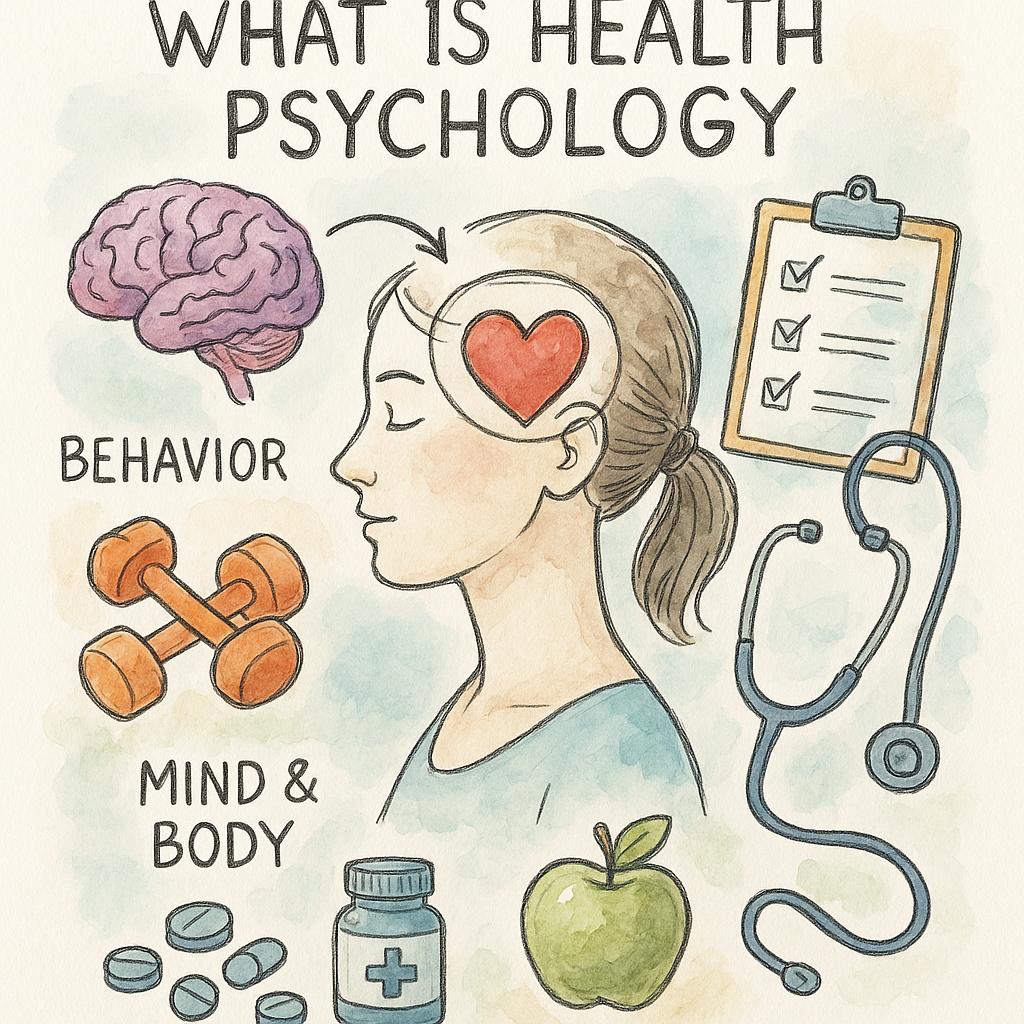
- Definition of Health Psychology: This field involves understanding psychological influences on how people stay healthy, why people get ill, and how individuals respond to illness. It is described as a relatively new and exciting field that is tangible, relevant, and brings together disciplines like biology, anatomy, science, psychology, and social context.
- Change in Societal Views on Health: Historically, views on health and illness have evolved, moving from explanations based on essential fluids (humoral theory) to concepts like mind-body dualism and later, the mind-body unitary hypothesis. This progression reflects a shift towards recognising the connection between the mind and body in health.
- The Biopsychosocial Model of Health: This is the current, trending approach to health which assumes that health is a result of coordinated influences from biological, psychological, and social factors. It emphasises considering all three factors in diagnosis and taking a holistic view of the person. It aims to prevent, diagnose, treat, and rehabilitate, looking at a life cycle approach to health.
- The Biomedical Model of Health: This is an older approach that assumes psychological and social factors are independent of health, which is seen as determined solely by biochemical or neurophysiological changes. This model primarily focuses on dealing with existing illness rather than health promotion and maintenance.
- The Nervous System: Comprised of a complex system of nerve fibers, organised into the central nervous system (CNS) and the peripheral nervous system (PNS). The CNS includes the brain and spinal cord. The brain is divided into the forebrain, cerebellum, and brainstem, each with special functions. The PNS has two parts: the somatic nervous system (serving skin and skeletal muscles, involved in sensory and motor functions) and the autonomic nervous system (activating internal organs). Neurotransmitters regulate both CNS and PNS function.
Theories and Frameworks
- Humoral Theory: An ancient Greek concept proposing that health and illness were influenced by the balance of four essential fluids: blood, black bile, yellow bile, and phlegm.
- Mind-Body Dualism (Cartesian Dualism): The perspective, significantly influenced by René Descartes, that the mind and body are separate entities.
- Mind-Body Unitary Hypothesis: This approach states that the mind and body are linked as a unit and influence one another.
- Conversion Hysteria: Introduced by Sigmund Freud, this concept describes how psychological conflict or problems in the mind can cause physical symptoms or deficits in the body.
- Biopsychosocial Model: Assumes health and illness result from the interplay of biological, psychological, and social factors.
- Biomedical Model: Assumes health and illness are solely due to biological changes, independent of psychological and social factors.
Notable Individuals
- René Descartes: French philosopher and mathematician who significantly influenced scientific thought and proposed Cartesian dualism, viewing the mind and body as separate.
- Sigmund Freud: Introduced the concept of conversion hysteria, proposing that mental problems could cause physical symptoms.
- Ramon Cajal: Mentioned in relation to nerve cell bodies and dendrites.
- David Reynolds: Conducted a study with rats demonstrating that impulses from the brain can inhibit pain perception.
- Melzack: Recognised the multidimensional nature of pain and developed the McGill Pain Questionnaire.
- Turk, Meichenbaum, & Genest: Mentioned in relation to laboratory methods for inducing pain and techniques like stress-inoculation training and pain diaries.
- Patrick Byrne and Barrie Long: Identified different styles of physician-patient interaction by analysing tape-recorded consultations.
- McKinlay: Conducted a study on patients’ understanding of medical jargon.
- Hall & Roter: Conducted reviews on communication processes in medical visits.
- Krupat: Mentioned in relation to medical school programs educating future physicians on interviewing skills and psychosocial factors.
- Weiner et al.: Mentioned in relation to medical school programs educating future physicians on psychosocial factors.
- Mauksch et al.: Mentioned in relation to eliciting a list of patient concerns at the start of a visit.