
Resources and summaries taken from the Lecture and Slides.
Resources
The Breakdown
Important
- Use the fourth edition of the textbook – while the third edition is available and similar, the instructor will be teaching from the fourth edition, and students are responsible for content from the fourth edition.
- Midterm exam date – Friday, October 18th, from 6 to 9 pm.
- Final exam weight – 50% of the final grade.
- Assignment weight – 20% of the final grade, described as easy if done as outlined and a few hours of work.
- Exam format – Primarily multiple choice, with about one-third non-multiple choice, including short answer questions, potentially true/false or diagrams.
- PMC student registration – If you are a PMC student, ensure you register with PMC for accommodations and do not wait too late.
- Distance student arrangements – If you are a distance student not writing on campus, apply as a distance student and make necessary arrangements without delay.
- Exams on campus – All exams will be written on campus; there are no online exams.
- Assignment goal – Develop a digital ad campaign around a specific health behavior to educate, convince, and change health behavior, with a clear take-home message. It should be anchored on a health behavior and use good stats from credible sources. Canadian stats and facts are a bonus.
- Health Psychology definition – Understanding psychological influences on how people stay healthy, why people get ill, and how they respond to that illness.
- World Health Organization definition of health – A multifactorial process involving physical, mental, and social self, not simply the absence of sickness.
- Health psychologists’ focus – Health promotion and maintenance, which is different from a standard doctor’s focus on treating existing illness.
- Humoral theory – Disease arose from an imbalance of essential fluids, and different personality types were associated with dominant humoral variables.
- Mind-body unitary hypothesis – The mind and body are linked and influence one another.
- Descartes’ perspective – Mind and body are separate entities (Cartesian dualism), the body is a machine, and they communicate through the pineal gland.
- Freud’s concept of conversion hysteria – The mind causes deficits in the body by converting psychological conflict into a physical symptom; psychological issues have a direct influence on the body. Addressing the psychological issue is suggested.
- Somaticizing – Converting a psychological problem into a physical symptom.
- Psychosomatic medicine – Bodily disorders are caused by psychosomatic issues; dealing with the psychological trigger is an approach.
- Biopsychosocial (BPS) model – Assumes coordinated influences by biological, psychological, and social factors on health; this is the current approach to health (2019). It is more inclusive and holistic than the biomedical model. All three factors must be considered in a diagnosis. Advantages include providing complete care within a team setting, sharing information, and building trust. It emphasizes both health and illness.
- Biomedical model – Assumes psychological and social factors are independent, and health is determined solely by neurological and biochemical processes or deviations; health is determined by biology alone. It emphasizes illness over health. Doctors using this model may not be trained to consider psychological or social factors contributing to illness.
- Crux of health psychology and health – The brain and behavior are linked, and they have a physiological basis.
- Anatomy and figures – Students do not need to memorize all the detailed anatomy and figures from the chapters, but they should understand what is discussed in class.
- Risk factors for leading causes of death – Many, such as hypertension, high blood pressure, cholesterol, diabetes, being overweight, drinking, lack of exercise, smoking, and stress, are lifestyle-related and linked to choices and behaviors.
- Socioeconomic factors – These will be discussed in pretty much every lecture as they relate to health.
- Health Belief Model – Includes concepts of perceived health threat (perceived susceptibility + perceived severity), perceived benefits, perceived barriers, cues to action, and self-efficacy.
- Theory of Planned Behavior – Behavior is a direct result of behavioral intention, which is influenced by attitudes towards the action, subjective norms (social pressure), and perceived behavioral control.
- Relapse Prevention Model – Addresses how to prevent returning to an unwanted behavior, noting that temptation decreases over time as one maintains the new behavior.
- Cognitive Behavioral Therapy (CBT) – Will come up often in the course; it helps change negative internal dialogue, provides coping strategies, empowers the patient through self-observation and monitoring.
- Social Engineering – Refers to how the world around us is set up to influence health outcomes, ideally to help us succeed in terms of health.
Core concepts
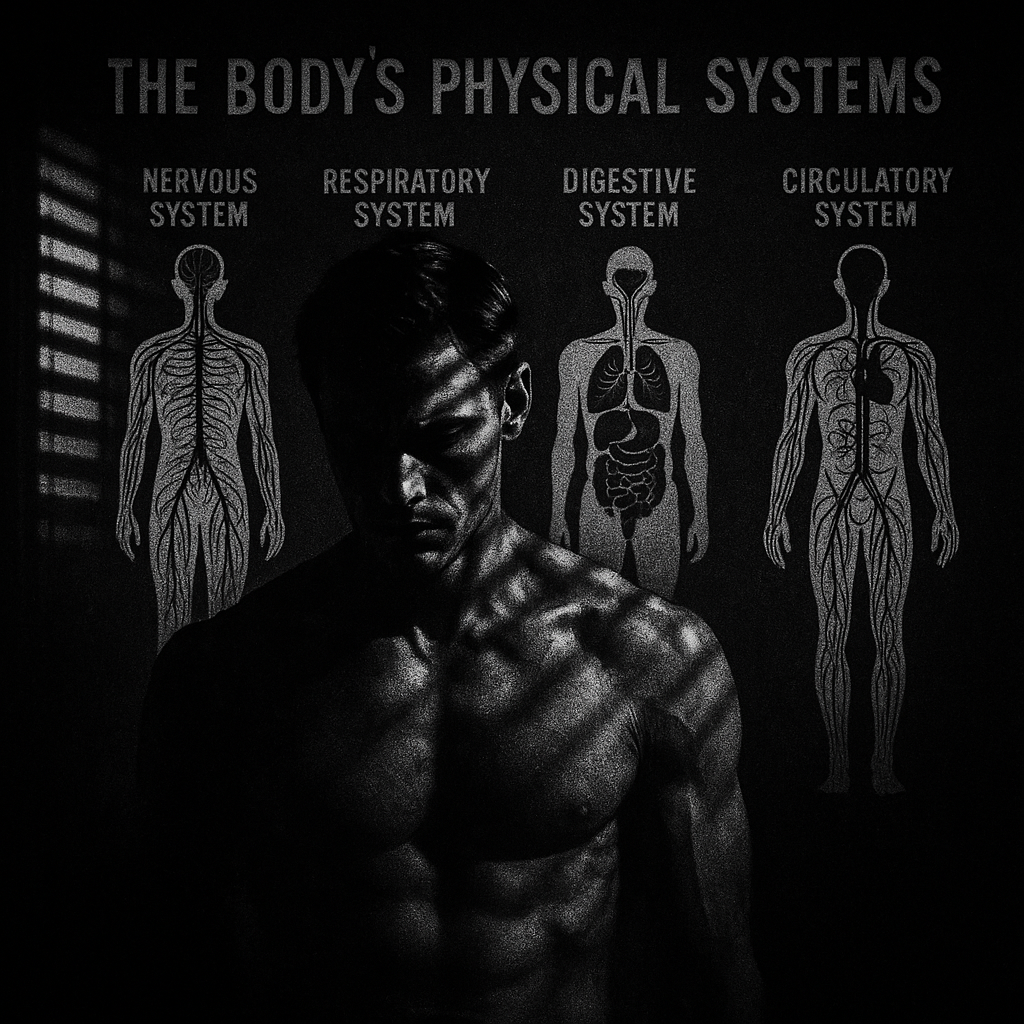
- Systems of the body: The course covers the Nervous system, Endocrine system, Digestive system, Respiratory system, Cardiovascular system, and Immune system as part of understanding the biological basis of health. – Detail: 3
- The Nervous System: Comprised of nerve fibers organised into the central nervous system (CNS) and the peripheral nervous system (PNS).
- Central Nervous System (CNS): Consists of the brain and spinal cord. The brain is located in the cranial cavity, and the spinal cord is in the spinal cavity. It controls body activities and integrates actions of internal organs.
- The Brain: Divided into the forebrain, the cerebellum, and the brainstem. The forebrain is the uppermost part and includes the telencephalon (cerebrum and limbic system) and the diencephalon (thalamus and hypothalamus). Areas toward the top and outer regions are involved in perceptual, motor, learning, and conceptual activities; regions toward the centre and bottom control internal/automatic functions and transmit information.
- Forebrain components: The cerebrum is the largest part, including the cerebral cortex involved in complex motor and mental activity. The limbic system is important in expressing emotions. The thalamus is a relay station for sensory and motor messages. The hypothalamus regulates internal functions, links to the endocrine system via the pituitary gland, and controls cardiac function, blood pressure, and respiration via parts of the medulla.
- Brainstem: The lowest portion of the brain, connecting to the spinal cord, and consists of the midbrain, pons, reticular system, and medulla. The midbrain relays sensory/motor info and is involved in visual/auditory reflexes and dopamine production.
- Peripheral Nervous System (PNS): Includes the somatic nervous system (sensory and motor functions for skin/skeletal muscles) and the autonomic nervous system (activates internal organs). Neurotransmitters regulate both CNS and PNS function. The sympathetic nervous system secretes norepinephrine and epinephrine.
- Spinal Cord: The major neural pathway connecting the brain to the peripheral nervous system. Damage can result in loss of motor control, sensation, and reflexes, with the extent of impairment depending on the location and amount of damage.
- Endocrine System: Consists of glands that secrete hormones, working together with the nervous system. Key glands include the adrenal glands, which secrete cortisol, epinephrine, and norepinephrine. The hypothalamus links to the pituitary gland.
- Other Body Systems: Module 2 also introduces the Digestive System (food journey, nutrient use, metabolism), Respiratory System (respiratory tract, function, disorders), Cardiovascular System (heart, blood vessels, blood pressure, blood composition, disorders like arteriosclerosis and atherosclerosis), and Immune System (antigens, organs, cells, defense mechanisms, disorders).
Theories and Frameworks
- Biopsychosocial model: A framework that integrates biological factors (the physical systems of the body), psychological factors, and social factors to understand health and illness.
- Stress response: Models describing the body’s physiological reaction to stress, involving interactions between the nervous and endocrine systems, and the release of hormones like cortisol, epinephrine, and norepinephrine.
- Mind-Body linkage: Concepts like the mind-body unitary hypothesis and psychosomatic medicine suggest that psychological states and conflicts can directly influence physical health and bodily systems.
Notable Individuals
- Tarry Ahuja: Instructor for the course.
- Sigmund Freud: Introduced the concept of conversion hysteria, linking psychological conflict to physical symptoms, influencing the development of psychosomatic medicine.
- René Descartes: Proposed mind-body dualism, viewing the mind and body as separate entities that interact, and conceived of the body as a machine.
- Ramon Cajal: Mentioned in the context of the brain, specifically regarding cell bodies and dendrites in the cortex.
- Ronald Melzack: Developed the McGill Pain Questionnaire and recognized the multidimensional nature of pain, involving sensory, affective, and evaluative dimensions.
- Hans Selye: Known for his work on stress and the General Adaptation Syndrome (GAS), describing the body’s physiological response to stressors.
- Blanchet Lalonde: Proposed a new field of study related to health focusing on prevention and promotion, beyond just treating illness.