
Resources
| Podcast | Download |
Video Summary
The video features Jacob (Mowegan) Wawatie, an Algonquin from Western Quebec, sharing the story of Turtle Island and discussing traditional Indigenous knowledge. Here’s a summary of the key points:
- Jacob’s Journey: Jacob’s journey began with his grandfather’s request to study the traditional education system of their people. This led him to his grandmother, who was raised by her great-great-grandmother who lived off the land, where he learned about nature and traditional legends. He went on a 14-day fast to understand the lifestyle before European settlement and learned the Turtle Island story.
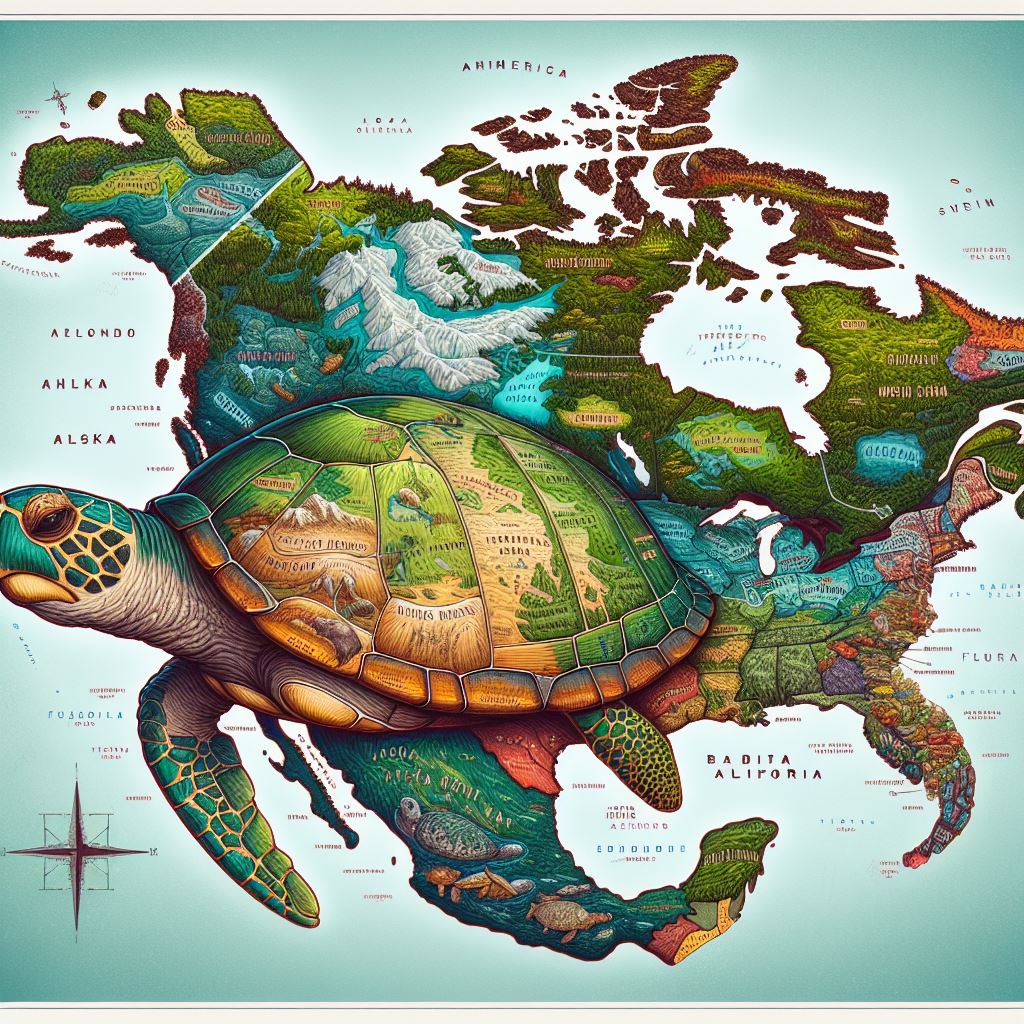
- Turtle Island Story: The Turtle Island story describes North America as the back of a giant turtle. The 13 mountains of North America are significant in this story.
- The turtle is tilted sideways, with the Rocky Mountains forming part of its side.
- Newfoundland, Nova Scotia, and Long Island are seen as the tips of mountains, while Baffin Island is the tip of its head.
- The tectonics follow the markings of the turtle.
- Six major rivers (St. Lawrence, Mississippi, Colorado, Fraser, Mackenzie, and Churchill) are seen as the arteries from the neck to the back leg of the turtle.
- Cuba, the Dominican Republic, and other islands are seen as the knuckles sticking out of the water.
- Other Continents: The story extends to other continents as well.
- Greenland is seen as the eyes of the turtle.
- The mountain range in Mexico follows the center of the turtle, with the Gulf of Mexico being where the meteor filled in, showing the back leg and tail.
- Other continents are seen as the head of the turtle, with the Amazon River going down to the sun, and the Andes mountains are related to the head, the shoulder is the European Alps and the Himalayas is the arm, with Australia, New Zealand, and other islands part of the extended body.
- The native people were supposed to bring the head back to the turtle’s tail.
- The Earth as a Living Entity: The Earth is seen as a living female entity, the grandmother turtle, while the male is like an elephant.
- Minerals are the communication system, like a nervous system of the Earth.
- Taking minerals from the earth disrupts this communication system, leading to problems like diabetes.
- Blocking river systems is like blocking veins, causing issues.
- Ocean Currents and Natural Disasters: The speaker describes two ocean currents, one going north and one going south, creating pressure that leads to disturbances in the ocean and air, which results in tornados and hurricanes.
- Importance of Natural Processes: Jacob emphasises the importance of working with nature, not against it.
- He describes how the various parts of the turtle, when eaten, are like eating different animals, highlighting the interconnectedness of all creatures.
- He discusses how over-processed food changes our DNA, leading to diseases.
- He explains the importance of eating whole plants for medicine rather than isolated properties.
- Traditional Knowledge as Science: Traditional knowledge is presented as a form of science based on observation. He sees traditional language as containing the accumulated knowledge and philosophy of a society.
- Call to Action: Jacob stresses the need to teach children about these natural processes. He calls for respecting all living things and encourages a return to natural ways of living. He advocates for an education system that incorporates traditional knowledge and a more balanced global vision.
- Modern Issues: The speaker talks about modern issues such as the industrialization, government systems, the catechism, and the education system. He also talks about issues such as birth control and its unintended side effects, such as obesity, which he ties to a lack of understanding of natural processes.
- The Future: Jacob emphasizes that it will take seven generations to rectify the damage to the earth and to reconstruct human DNA. He concludes by saying that all his teachings are not for his own benefit, but for the benefit of the next seven generations.
The speaker shares his desire for his children, and all children, to understand and respect the natural world and for life to continue.