
Important
- Disorders of Deception Decision Tree – Students must memorize the specific figure distinguishing disorders based on two components: intentionality (are symptoms produced on purpose?) and motivation (is the goal internal or external).
- Malingering vs. Factitious Disorder vs. Conversion Disorder – It is critical to distinguish these three: Malingering involves intentional symptoms for an external goal (money, evading police); Factitious Disorder involves intentional symptoms for an internal goal (patient role/attention); Conversion Disorder involves unintentional symptoms with no external incentive,,,.
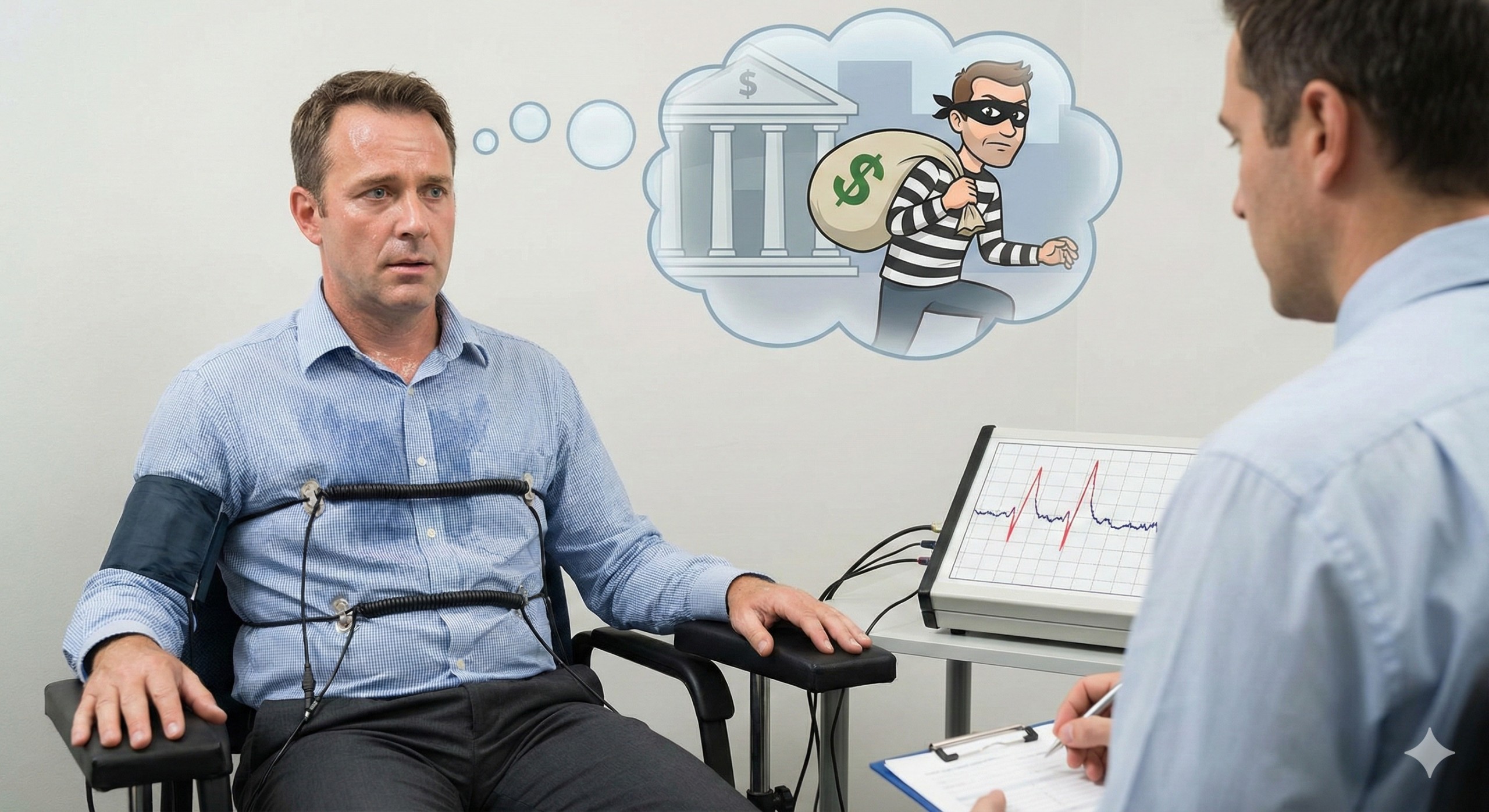
- Polygraph Error Rates – Students need to know that the Comparison Question Test (CQT) has a high false positive rate (innocents identified as guilty), whereas the Concealed Information Test (CIT) has a high false negative rate (guilty identified as innocent),,,.
- Eyewitness Misidentification – This is the single greatest cause of wrongful convictions, accounting for approximately 70-75% of DNA exoneration cases,.
- High-Stakes Lies – While police are generally poor at detecting lies in lab settings (near chance), accuracy improves significantly (to approx. 70%) when detecting high-stakes lies, such as false pleas regarding missing relatives,.
- Lineup Decision Implications – Students must know the table of lineup outcomes, specifically that a False Identification (identifying an innocent person) is the most dangerous error because the innocent are prosecuted and the guilty remain free,,.
- Criminological Model Validity – It is important to note that while the Criminological Model of malingering (suspecting malingering due to legal trouble or antisocial personality) is included in the DSM-5, research does not support it; the Adaptational Model has the most empirical support,,.
Core Concepts
- Polygraph Techniques: The Comparison Question Test (CQT) compares physiological arousal between crime-relevant and “probable-lie” comparison questions to infer deception, while the Concealed Information Test (CIT) looks for physiological peaks (like skin conductance) in response to crime details only the perpetrator would know (guilty knowledge),,.
- Countermeasures: Techniques used to fool the polygraph; physical countermeasures (e.g., pressing toes, biting tongue) and mental countermeasures (e.g., counting backward) have been shown to allow up to 50% of guilty suspects to beat the test,.
- Brain-Based Deception Detection: Techniques include ERPs/P300 (measuring brainwave recognition of concealed details), fMRI (measuring blood flow in prefrontal/parietal cortex), and thermal imaging (measuring facial warming); fMRI evidence is noted for being overly persuasive to jurors despite lack of precision,,,,.
- Verbal and Nonverbal Cues: Reliable cues to lying include increased voice pitch, slower speech rate, and fewer hand/leg movements (rigidity); contrary to popular belief, fidgeting and gaze aversion are not reliable indicators of deception,,,.
- Misinformation Effect: A phenomenon where a witness incorporates inaccurate information provided after an event (e.g., through leading questions) into their memory, permanently altering their recall of the original event,,.
- System vs. Estimator Variables: Estimator variables are factors present at the time of the crime that the justice system cannot control (e.g., weapon focus, lighting, witness age), while System variables are factors the justice system can control (e.g., lineup instructions, interview procedures),.
- Weapon Focus Effect: The tendency for witnesses to focus attention on a weapon rather than the perpetrator’s face, resulting in poorer identification accuracy; this is explained by arousal (cue-utilization) or unusualness of the object,,.
- Cross-Race Effect: The robust finding that witnesses are more accurate at identifying faces of their own race than faces of other races, likely due to lack of interracial contact,.
- Lineup Presentation: In a simultaneous lineup, all members are shown at once (encouraging relative judgment), whereas in a sequential lineup, members are shown one at a time (encouraging absolute judgment), which typically reduces false identifications,.
Theories and Frameworks
- Models of Malingering: Three theories explaining why people feign illness: Pathogenic (underlying mental disorder causes faking), Criminological (faking to avoid legal consequences/high antisocial traits), and Adaptational (faking to cope with a stressful/adversarial situation),,.
- Explanatory Frameworks for Deception: Three perspectives on why deception cues exist: Emotional (lying causes stress/arousal), Cognitive (lying requires high cognitive load), and Control (liars attempt to suppress behaviour, leading to rigidity),.
- Misinformation Hypotheses: Theories explaining the misinformation effect: Misinformation Acceptance (guessing to please the interviewer), Source Misattribution (recalling both true and false memories but confusing the source), and Memory Impairment (the original memory is overwritten/erased),,.
Notable Individuals
- Elizabeth Loftus: A prominent researcher known for demonstrating the malleability of memory and the misinformation effect (e.g., the “smashed” vs. “hit” car crash study),.
- Paul Ekman: A researcher associated with the study of microexpressions (brief facial expressions revealing concealed emotion) as leakage cues for deception,.
- Scott Peterson: A convicted murderer whose media interviews (“God, she is amazing”) served as examples of verbal leakage and high-stakes lying,.
- Susan Smith: A woman who murdered her children and gave false televised pleas for their return; her case illustrates high-stakes deception and “grief muscles”,,.
- Terry Harrington: A man exonerated of murder partially due to P300/Brain Fingerprinting evidence showing he lacked “guilty knowledge” of the crime scene,.
- Kenneth Bianchi: The “Hillside Strangler” who attempted to malinger Multiple Personality Disorder (creating “Steve Walker”) to avoid the death penalty but was caught by hypnosis expert Dr. Orne,.
- Kaitlyn Braun: A recent case study of Factitious Disorder; she faked pregnancies and stillbirths to gain emotional support and attention from doulas,.