
Resources
The Breakdown
Scientific Research in Psychology
A Model of Scientific Research in Psychology
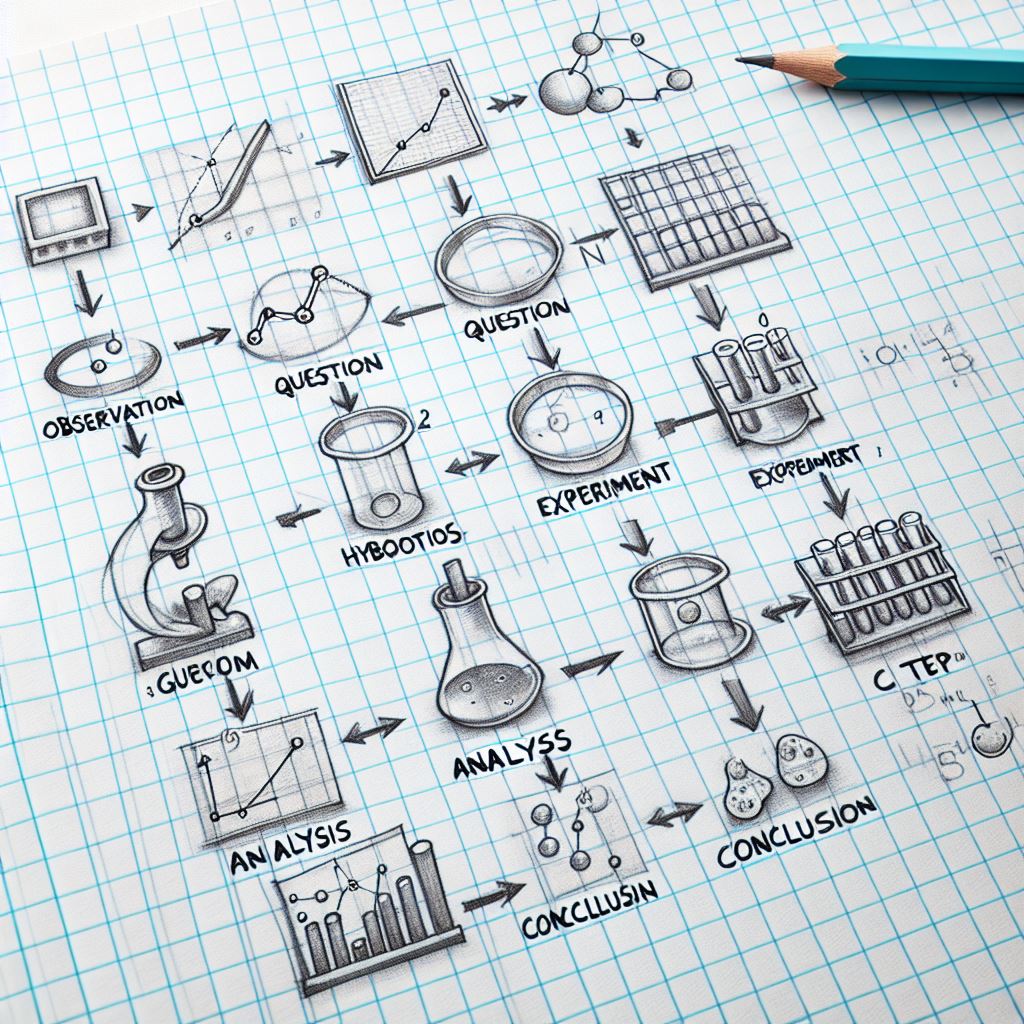
The process is typically conceptualised as a simple cyclical model:
- Researchers formulate a research question.
- They conduct an empirical study designed to answer the question.
- They analyse the resulting data.
- They draw conclusions about the answer to the question.
- They publish the results so they become part of the research literature.
- This creates a cycle where the research literature becomes a primary source of new research questions.
- Research questions can also originate from informal observations or practical problems. In these cases, researchers would still check the existing literature.
Finding a Research Topic
Previous research, meaning the research literature, is one of the most common sources of inspiration.
- Reviewing the research literature involves finding, reading, and summarising published research relevant to a topic of interest.
- Reviewing literature early on is important because it helps discover new questions, refine the research question, identify appropriate research methods, place the research in context, and prepare to write the research report.
- The research literature primarily consists of empirical research reports (describing new studies) and review articles (summarising previous research). Review articles often provide overviews, discuss important definitions, theories, trends, and controversies. Empirical reports can offer ideas for measurement and data collection methods.
- Databases like PsycINFO are used to search the literature. PsycINFO records include abstracts, keywords, and standardised index terms. Using specific search terms and index terms (found via a thesaurus) helps narrow searches in large databases.
- Researchers should be selective in their literature review, focusing on sources that help achieve specific goals like refining the question or identifying methods. It’s helpful to find information that argues for the interestingness of the research question, such as statistics on related real-world issues.
- Example Application: If interested in sex differences in early memories, searching PsycINFO might start too broadly with “memory”. Using the thesaurus to find index terms like “early memories” and combining it with “human sex differences” helps find relevant articles.
Generating Good Research Questions
Research ideas need to be turned into empirically testable research questions.
- These questions are expressed in terms of a single variable or a relationship between variables.
- One technique is to examine the discussion sections of recent research articles, as they often suggest directions for future research in the form of specific questions. Experienced researchers have likely already identified these as interesting and important.
- Evaluating the interestingness of a research question is important. Uncertainty about the answer contributes to making a question interesting.
Developing a Hypothesis
This section distinguishes between a theory and a hypothesis.
- A theory is a coherent explanation or interpretation of one or more phenomena. Theories go beyond the phenomena by including concepts (variables, structures, processes) that haven’t been directly observed. They are broad and explain larger bodies of data.
- Example Theory: Zajonc’s drive theory proposes that physiological arousal from being watched increases the likelihood of the dominant response, explaining both social facilitation and inhibition.
- A hypothesis is a specific prediction about a new phenomenon that should be observed if a particular theory is accurate. It relies on just a few key concepts and is often a prediction about what will happen in a particular study. Hypotheses are usually derived from theories, but some can be a-theoretical, with a theory developed later based on observations.
- Example Hypothesis Derived from Theory: Based on Zajonc’s drive theory, a hypothesis could predict social facilitation for well-learned tasks and social inhibition for poorly learned tasks when being watched.
- Example Hypothesis Testing Competing Theories: Schwarz and colleagues (1991) tested two theories about self-judgments (based on the number of examples brought to mind vs. the ease of bringing them to mind) by hypothesising opposite outcomes when people recalled either six or 12 examples of assertive behaviour.
- The hypothetico-deductive method is the primary way scientific researchers use theories. This cycle involves starting with phenomena/theory, deriving a hypothesis, testing it with an empirical study, and then reevaluating/revising the theory based on the results.
- Theories can be incorporated into research either by offering a theory to explain results after a study, or by deriving a hypothesis from an existing theory to test. The latter is particularly effective if the hypothesis is surprising or conflicts with another theory.
Designing a Research Study
This stage involves planning the empirical study. Details on specific designs (experimental, non-experimental, etc.) are covered in later chapters.
Analyzing the Data
Once the study is complete and observations are recorded, researchers analyse the data.
- Both descriptive and inferential statistics are typically used.
- Descriptive statistics are used to summarise the data from the sample. They include measures like central tendency (mean, median, mode) and variability (range, standard deviation, variance).
- Inferential statistics are used to generalise the results from the sample to the population and to draw conclusions about whether a theory is supported, refuted, or needs modification. They help determine if findings are statistically significant, meaning unlikely due to chance alone. The p-value (probability of the sample result if the null hypothesis is true) depends on relationship strength and sample size.
- Before primary analyses, preliminary analyses are conducted. These include assessing internal consistency of measures, examining distributions of variables, and identifying outliers. Outliers may be excluded if they represent errors or misunderstandings, but the rationale must be reported. Analysing data both with and without outliers can be useful.
- Researchers conduct planned analyses to test expected hypotheses and exploratory analyses to look for unexpected patterns. Results from exploratory analyses should be viewed cautiously and ideally replicated.
- It is essential to first understand the descriptive statistics thoroughly, as they tell “what happened” in the study, before moving to inferential statistics.
Drawing Conclusions and Reporting the Results
Based on data analysis, researchers draw conclusions.
- Because statistics are probabilistic and results can be influenced by errors (Type I or Type II), the results of a single study cannot conclude with certainty that a theory is true. Instead, theories are supported, refuted, or modified. Scientists generally avoid the term “scientific proof”.
- Research is complete only when the results are shared with the scientific community. Publishing results makes them part of the research literature.
- Findings are shared in various formats, most commonly in professional journals. Writing in psychology typically follows American Psychological Association (APA) style.
- An APA-style empirical research report includes standard sections: title page, abstract, introduction, method, results, discussion, and references.
- The results section presents findings clearly, including relevant statistics but also explaining results in words.
- The discussion section summarises the study, interprets the results in the context of theory and practice, notes limitations, and suggests future research.
- Other presentation formats include review articles, theoretical articles, theses, and posters. Sharing raw data and materials (open science practices) is increasingly common.